


Emergency hot water service. Local specialists. No call-out fee.
When a hot water system fails, it often happens suddenly and at the worst possible time. That was the case for a Ryde homeowner who recently called us after discovering their outdoor water heater leaning dangerously to one side. The customer sent through photos, and it was immediately clear the tank had ruptured at the base due to severe over-pressurising. This left the unit beyond repair and in urgent need of replacement.
Why hot water systems over-pressurise
A water heater can be placed under extreme stress when safety mechanisms stop working as they should.
Common causes include:
- A blocked or faulty Temperature and Pressure Relief (TPR) valve that can’t release excess pressure.
- Overheating water caused by a thermostat or element fault.
- Excessive mains pressure not regulated by a limiting valve.
- Lack of servicing, which allows sediment to build up and parts to deteriorate.
In rare cases, pressure can build to dangerous levels, forcing the tank to split or rupture. This is why regular maintenance is so important.
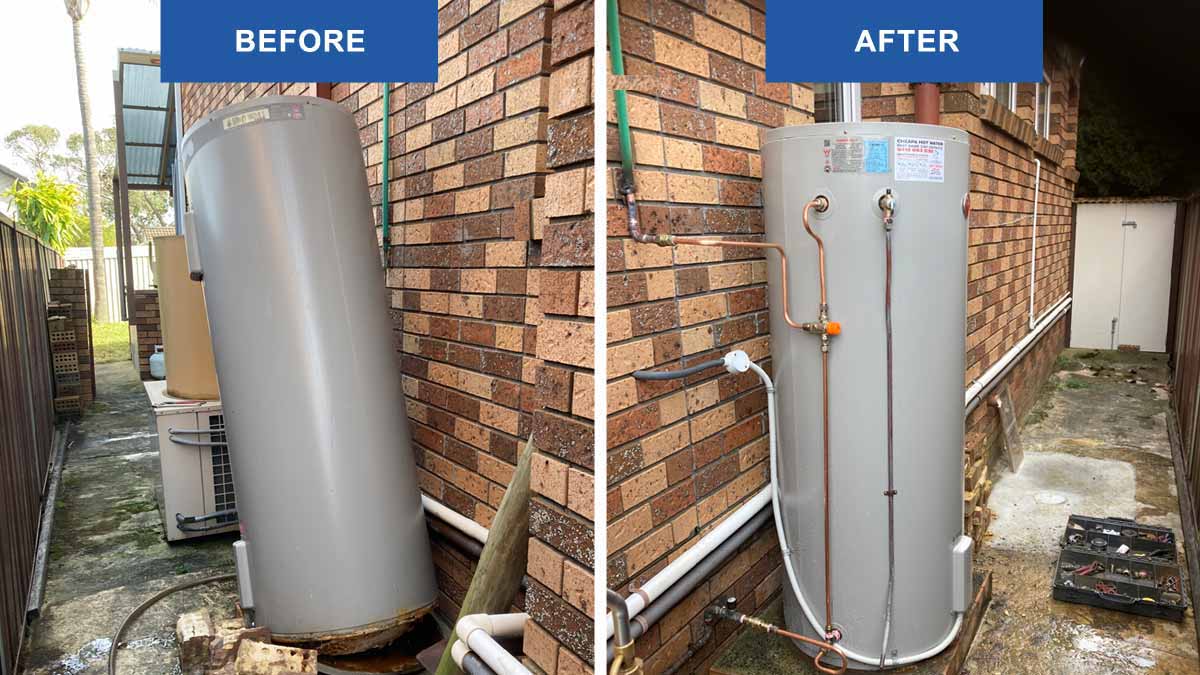
An emergency water heater repair
On arrival at the property,we confirmed the customer’s old tank was irreparably damaged. After discussing their hot water usage and budget, we supplied and installed a new Rheem 160L twin element electric system. Because our trucks carry a wide range of replacement tanks and spare parts, we were able to complete the installation the same day. By that evening, the family was back enjoying reliable hot water and peace of mind.
Why servicing your water heater every 5 years is essential
Your hot water heater works quietly in the background, but without maintenance, safety valves and internal components can fail. Servicing every five years by a licensed technician ensures:
- Parts showing early wear are replaced before they fail.
- Safety valves, elements, and thermostats are tested.
- The tank runs more efficiently, reducing energy costs.
- The system lasts longer, avoiding expensive replacements.
A professional service usually takes 30–45 minutes and is one of the simplest ways to protect both your system and your household.
Other hot water emergencies to watch for
A ruptured tank is dramatic, but other common issues can also require urgent attention:
Constantly running or dripping TPR valve
If the temperature and pressure relief valve continues to run or drip water, it often indicates excess pressure or heat building inside the tank, which can compromise the safety of your system if left unresolved.
Leaking tank or pooling water around the base
Water collecting at the bottom of the heater or visibly leaking from the tank is usually a sign of internal cylinder failure or corrosion, and often means the system is nearing the end of its life.
No hot water at all
A complete lack of hot water can point to a number of issues including thermostat faults, a failed heating element, or ignition problems in gas systems, all of which require prompt repair to restore supply.
Rust-coloured or dirty water from taps
When your hot water appears rusty, discoloured, or dirty, it may be caused by corrosion inside the tank or a deteriorated anode rod, which can also lead to unpleasant odours and taste.
Strange noises like banging or rumbling inside the tank
Loud noises coming from the water heater, such as banging, popping, or rumbling, are often the result of sediment build-up at the bottom of the tank, causing the system to overheat and operate inefficiently.
Water that’s too hot (thermostat failure)
If your hot water is dangerously hot, it may be due to a thermostat malfunction that allows the heating element or burner to run unchecked, creating both scalding risks and strain on the system.
Gas odours around gas systems
Any smell of gas near a water heater should be treated as an urgent safety hazard, as it may indicate a leak in the pipework, fittings, or burner assembly that requires immediate professional attention.
If you notice any of these signs, it’s best to call for professional help immediately before the issue escalates.
Quick DIY water heater checks you can make
In between professional services, there are simple things you can do every couple of months:
- Look for leaks – inspect around the base, pipes, and valves.
- Test the relief valve – gently lift the lever to check water discharges briefly.
- Monitor water temperature – if it fluctuates, something may be wrong.
- Check for ants – they sometimes nest around outdoor heaters and interfere with components.
- Keep the base clear – remove weeds, grass, and soil to reduce rust risk.
These checks won’t replace a service, but they help you spot early warning signs.
EMERGENCY WATER HEATER REPAIRS
If your hot water system is leaking, not heating, or showing signs of stress, don’t wait for it to fail completely. Our local hot water specialists provide same-day emergency repairs and replacements across the entire Ryde area and surrounds.
Our fully stocked trucks carry thousands of spare parts and replacement tanks, so in most cases we can repair or replace your system on the spot. Call our friendly team today and we’ll get your hot water running safely and efficiently again.